Just Clowning Around

Rodeo clowns are real heroes. A suspendered dude with a barrel for britches who keeps a 2,000-pound bull from stomping a mud hole in you certainly gets my accolades!

But where are the clowns if you’re not a rodeo star?

I sure didn’t see any a couple of desperate times while growing up on our Arizona ranch. For example, one time a mama cow with no sense of humor took after me across the corral yard.

This non-divine bovine had no idea I merely wanted to pat and admire her new calf. No ma’am. She was prejudiced. She decided, spur of the moment, I was the new serial cow killer in town.

The moment she rolled those big, well…cow eyes…at me, I knew I’d best be moseying right along, thank you, like r-i-g-h-t n-o-w!

That four-legged express train roared from standstill to 100 mph in one picosecond. My fight or flight syndrome clicked in at about 100.1/2 mph, and the chase was on.

As I hit the corral and shimmied up the slats like a monkey in a tree-climbing contest, I felt  mama cow’s head slam into the boards underneath my shoe soles.

So where were those nice clowns to save my skin that day?

I didn’t see a single one as I wheezed and gasped on the safe side of the fence.

Ol’ Mrs. Udderly let out a snooty bellow, pawed the ground a few times and—I promise this is true—swaggered back to her doe-eyed baby calf.

Sheesh!

Another memorable time, I was allowed to go on a daylong, calf-gathering drive. This was way back in the Macho-via era when cowpunchers were mostly gnarly handed males with parentheses-shaped legs bowed from living on the back of a hoss.

Women folk who went on cattle drives had to be 1) amazing cooks, or 2) look like Jane Russell.

Being twelve years old and looking in no way like Miss Russell, I perceived this privilege as very big indeed. By the late hour in which I was granted this exquisite honor, all the good and grand horses were taken by the higher and mightier cattlemen.

Me? I was stuck with Little Shet, a spotted, squatty Shetland pony.

Little Shet was surefooted enough. The only trouble was his gait and style. He bounded up each hill and down each gully with his short pudgy legs working twice as fast and hard as the other horses’ long graceful legs.

The truth is, he looked like a cartoon with all that extra effort and movement.

What else could I do but hold myself as straight as a matchstick in my miniature “Little Shet” saddle and try not to think about how my head was a good three or four feet below the other riders’ heads?

The most agonizing part was that one of the other riders in the cattle drive happened to be a neighboring rancher’s good-looking son whom I had a fierce crush on!

Several times, I caught him smiling at me that day. Or was he smirking? I wasn’t sure.

Everything would have worked out just dandy if that little dollop of a horse hadn’t gotten ornery when we arrived back at the barn that evening. Sometimes horses do that, and I don’t know what triggered Little Shet’s change of temperament. Maybe he was just happy to be home.

I can forgive lots, really I can. But being bucked over Little Shet’s head, hair-first, onto a carpet of fresh cow patties would have tried anyone’s patience!

Stomping off in my high-heeled boots, my head reeking but held high, I remember thinking,

“Where are all the clowns to settle MY horse and escort ME to the chute?”

I’ll tell you where they were…

 They were draped over their steeds whooping, hollering and slapping their thighs!


Copyrighted, original art by Benito, “The Collegian,” Tarrant Community College, Fort Worth, Texas

Yehaw! Enjoy the  National Day of the cowboy!  July 28, 2012!

Read what Women Writing the West says about the Women’s West.

What is a Cowboy? Read D.B. Jackson’s explanation.


Arrow


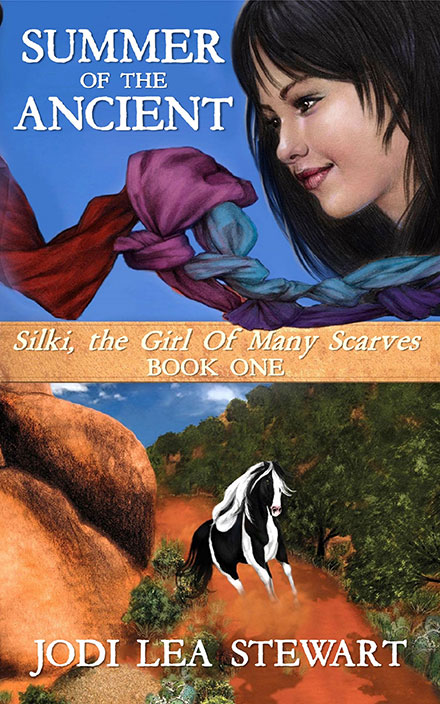
If you like Sassy, Danger and Mystery …  you’ll love my novel! I hope you’ll pick up a copy of Silki, the Girl of Many Scarves: SUMMER OF THE ANCIENT. It’s available at your nearest Barnes & Noble Bookseller (note: ask them to order it from their Master List…they know it’s on there! :D ), on my website, B&N.com and Amazon. For your convenience, it’s also available for Kindle, the Nook and most other eBook readers.

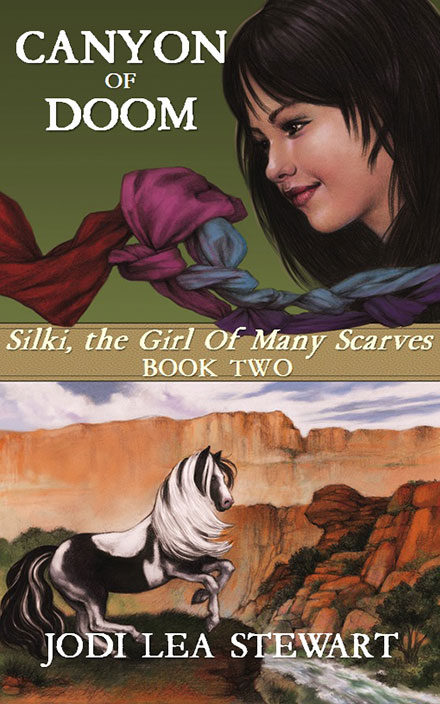
Book Two of the Silki series, CANYON OF DOOM, debuts in early 2013. Watch for it!

While you’re here, I’d be pleased as a frog in a jar of flies if you’d have a look around my website. To sign up to receive notices of new blogs, recipes, appearances and media news, leave your email address above. I’ll take care of the rest. Y’all come back soon … I miss you already!


“Wanna hear a secret, Madge?”

Pssst! – All media used in my blogs are acquired by payment for their use or don’t require licensing for public use. Sometimes I use my own personal photos. Please play it safe and don’t recycle images, okay? 


FryBread – a Bite Out of History


Take a little nibble of frybread and close your eyes.

Hear the ancient winds moaning through the canyons?

Feel the sunlight on your bare skin?

Smell the cedar and sage perfuming the air?

Can you taste the blessing of life?

More than 500 Native American tribes can. For them, frybread history epitomizes a time when they were destitute and steeped in hopelessness. Uprooted from their homelands, and incarcerated on reservations mapped out by the U.S. government, Indigenous people were no longer privy to familiar hunting, trapping and fishing domains. Starving and relying on scarce Army rations in the 1800s, Native Americans concocted a simple bread that became a lifesaver.

History’s Most Startling Frybread Story

Between 1864 and 1866, scout Kit Carson and the U.S. Cavalry drove the Navajos (Diné) from their homes on the Colorado Plateau to Window Rock, Arizona. From there, they were herded like cattle to Fort Sumner, New Mexico, a reservation along the Pecos River in eastern New Mexico.

Navajos called it Hwéeldi.

Fifty-three forced marches in all.

As many as 8,000 Navajos uprooted.

Three to four hundred grueling miles on foot.

Hundreds died.

Slow, elderly or injured Navajos were often shot and killed.

History calls it The Long Walk of the Navajo.

“Many of the Navajo people went to the Arizona mountains to hide. Some of the people are still living there. The Navajos who lived in the desert or valleys had no place to hide. They were either captured for slaves or killed. Some of the people who were captured were taken to Hwéeldi [Ft. Sumner] as captives.” (John Beyale, Sr., OHLW 1989:42) – From A Navajo Diaspora:  The Long Walk to Hwéeldi, by Neal W. Ackerly, Ph.D.

While imprisoned in Fort Sumner, the Diné were given Army rations of flour (varmints included), salt, lard and water. From those few simple ingredients, they created pliable dough, fashioned it into balls, stretched it and fried it in hot lard.

Voilà…frybread!

It saved their lives.

It gave them hope.

It ensured the survival of their tribe.

Forget About Frybread?

Most Native Americans share a love and respect for frybread. In recent years, a movement to disqualify frybread as a staple of Native American culture has mostly fallen flat. Who gives up a comfort food that symbolizes the spirit of persistence?

Cut back on eating it and use discretion? Sure. But give up frybread? Never!

It’s round.

It’s puffy.

It’s fried.

It’s delicious.

It’s even funny!

Frybread is Funny?

Yes.

T-shirts, cartoons, comedians, competitions and even movies make light of the soul food of the Indigenous.

All tribes want to claim frybread as their own, and they kid each other about who makes the best. Now, “More Than Frybread” is the only feature length film devoted entirely to the love and passion of frybread. It features a fictional frybread competition among twenty-two tribes and spoofs all that is sacred – and not-so-sacred – about the golden-brown delicacy.

You know you want to check it out! 

So, eat it plain or stack it high with everything from meat, chicken, and olives to salad, fruit, honey or jam. Just remember…when you take a bite out of frybread, you’re taking a bite straight out of history.

What’s your favorite way to enjoy frybread? Do you make it yourself? Is it a recipe passed down from your grandmother/mother/aunt? For a delicious homemade version, see  Lolita Tsosie’s Navajo FryBread recipe. A little simpler version can be found here.  Don’t forget to buy your Blue Bird flour first – it’s the best!

Hwéeldi Bééhániih

Arrow

Of course, a visit isn’t a visit without a two-way conversation. I really want to hear from you.

I truly hope you’ll pick up a copy of my novel Silki, the Girl of Many Scarves: SUMMER OF THE ANCIENT. It’s available at your nearest Barnes & Noble Bookseller (note: ask them to order it from their Master List…they know it’s on there! :D ), on my website, B&N.com and Amazon. For your convenience, it’s also available for the Kindle, the Nook and most other eBook readers.

If you love the Southwest and kooky little characters that make you laugh aloud as authentic danger and mystery swirl at every turn, you’ll love this novel! The second book in the series, CANYON OF DOOM, debuts in early 2013.

While you’re here, please have a look around my website. To sign up to receive notices of my new blogs, recipes, appearances and media news, just leave your email address above. I’ll take care of the rest. Y’all come back soon … I miss you already!

Why Wes Studi is the Father of my Baby, er…I Mean, Protagonist

Just how did my current Young Adult mystery/adventure series wind up in the Navajo Nation?

Actors Irene Bedard and Wes Studi (aka Frank Begay). It’s okay by me if Irene wants to play the part of Auntie Zim in the Silki, the Girl of Many Scarves series—she’s perfect for it!

I’ll tell you. One day, when I was about knee high to a katydid, my mom moved us to Arizona.

I went from picking blackberries with my cousins to jumping flat-footed into a tall cow-feed bin as I witnessed my first cattle-branding event.

I was traumatized…

even though the ranchers told me the calves were laughing. Yeah, they told me those things they threw in the fire and ate later on were oysters, too. They were. Mountain oysters.

Our Arizona high-country ranch was located between the Navajo Rez and the White Mountain Apache Tribe Rez. My schoolmates were Native American, Hispanic and just a few Anglos, like five or six of them. In case you don’t know, Anglos are Caucasians.

It was, at the very least, an incredible experience; and it marked me for life. I forever gallop the winds of my imagination in the high country – in my mind, and in my novels.

Now you know why I started my novel-writing career smack dab in the Navajo Nation, don’t you?

My protagonist for the Silki, the Girl of Many Scarves series, is a young Navajo with a steroid imagination, a penchant for adventure and an addiction to scarves. Her professor mother, immersed in academia, isn’t around a lot. Her dad is.

Meet Frank Begay – “Silki’s dad.”

Silversmith. Musician. Husband. Father. Son. Uncle. Son-in-law. Wise counselor. Diné.

Think about that; this man has a lot on his shoulders.

Now peek up there at Wes Studi.

See the twinkling eyes? The shy, strong smile. The map of wisdom engraving his face?

No doubt about it…when Hollywood knocks on my door, Wes plays Frank!

I already know your arguments.

Wes Studi is Cherokee, not Navajo. It’s a movie part…not real life!  M-O-V-I-E. Entertainment. Playacting. Sheesh. I hope that settles that one. *dusts off hands*

Wes Studi is a little older than Frank Begay.  You’re worried about that? Just look at that timeless face. I say Wes Studi can play characters in their mid-thirties to their sixties and beyond.  It’s not the age; it’s the actor – and brother, can he act! Think Dances with Wolves, Last of the Mohicans, Avatar.

Wes Studi, actor

Anyhoo, next time any of you happens to run into Wes, like in Hollywood or Colorado or some other cool place, tell  him “toodle-oo” for me, and that he has first crack at the part of Frank in the Silki movies – just as soon as Hollywood goes gaga over my Silki novels – of course.

Minor detail.

Readers, do certain actors seem perfect for the characters in the books you read?

Writers, who do you think should play the major parts in your novel(s) when Hollywood beats on your door?

Tell us about it.

We’re dying to know!


Arrow


Of course, a visit isn’t a visit without a two-way conversation. I really want to hear from you.

I truly hope you’ll pick up a copy of my novel Silki, the Girl of Many Scarves: SUMMER OF THE ANCIENT. The print version is on sale at Amazon for only $9.85!!! For your convenience, it’s also available for Kindle, the Nook and for most other eBook readers. If you love the Southwest and kooky little characters that make you laugh aloud as authentic danger and mystery swirl at every turn, you’ll love this novel! The second book in the series, CANYON OF DOOM, debuts in early 2013.

While you’re here, please have a look around my website. To sign up to receive notices of my new blogs, recipes, appearances and media news, just leave your email address above. I’ll take care of the rest. Y’all come back soon … I miss you already!

The Lost and Angry Pound


–Image by John Lofgreen http://johnlofgreen.blogspot.com/2011/09/my-most-famous-paintings.

Draped over a rock still warm from the day’s scorcher…

…the lizard gazed thoughtfully at the ghost town silver lined by a full Arizona moon. A saloon glowed softly among the deserted buildings. Tinkling piano music mixed with the occasional clamor of loud voices and laughter drifted into the night sky.

The desert iguana slithered off his vantage point and moved silently through thirsty weeds and baked red rocks.

Cautiously, he darted beneath the rotting boards of the old boardwalk running the length of Main Street. He paused to chart the slope of the saloon wall and catch his breath. His eyes rolled in a full circle to check for danger before he scampered up the rough-hewn timber. Upside-down and hidden by the shadow of the overhang, the desert sentinel gazed through the dull glass window into the amber haze of kerosene lamp light.

Something definitely had the customers riled up inside.

Buttery yellow and dirty-white shapes clustered against the inside walls. More shapes waddled side to side around the room. The choking odor of rancid grease hung in the air.

Yessir, the lizard allowed, Blubber Gulch Saloon was like no other this side of the Rio Grande. It was known in the West as a place where outlaw fatty globules and lost, lonely pounds could hang out with no diets breathing down their double necks.

“Bartender! Give me another!” shouted a clotted, ill-shaped Pound at the bar. He lifted a shaky mug toward the serene Pound behind the bar.

“You betcha, Blob,” said the bartender, quickly filling Blob’s mug full of syrupy lubricate. Blob downed the liquid in one gulp, burped an oily belch, then spat on the floor.

“Yeah, I dropped off ol’ Jodi and laid on her floor shaking like curdled cream. That is, until I got mah wits back together.”

Blob’s wheeze sounded like a sack full of cats. He turned to the crowd gathering around him and continued. “When I got back to sensibility, I rolled over to a corner and waited. Couldn’t even sit up at first.”

Once again, Blob extended his mug toward the accommodating bartender.

“It ain’t no fair. That Jodi never appreciated me. Nah, not one bit. Fact is, she out and out hated me!”

A collective gasp rose from the onlookers. Blob’s eyes narrowed to slits as he leaned toward them.

“Don’t feel sorry for old Blob, gents. I’ll bide mah time and hang low for a spell. You just mark my words. Before that ornery Jodi can cram her legs into those new…” He looked around with fiery cinder eyes “… SKINNY…jeans, I’ll be right back where I came from, right in the middle of her left thigh!”

Commotion broke out among the Pounds.

“Now listen here, Blob. This is a respectable place. Don’t come in here using bad language! You cuss that ‘skinny’ word again, and I’m gonna have to throw you out,” the bartender warned.

Blog growled and dipped his fingers in a jar of grease sitting on the bar. After noisily sucking them clean, he pointed at the ceiling.

“I’ll be back, Miz Hotsy-Totsy Jodi Lea Stewart, and I’m bringing a bunch of mah renegade friends with me. You ain’t seen the last of me and my kind!”

With that, Blob fell backward in a greasy stupor. His cohorts strained as they pulled him toward the wall, leaving a broad streak of fat on the floor.

No one noticed the lizard shaking his head over the smudgy glass window. Slowly he made his descent and disappeared into the darkness. He walked until the light peeked over the horizon, his tail leaving curvy “S” marks in the silent sand.

Did you ever think about where all those pounds go when we drop them? Maybe a little ghost town in the Arizona desert? If you’re like me, my pounds don’t have to wait very long before “coming home!”

Arrow

 
Of course, a visit isn’t a visit without a two-way conversation. I really want to hear from you.

I truly hope you’ll pick up a copy of my novel Silki, the Girl of Many Scarves: SUMMER OF THE ANCIENT. The print version is on sale at Amazon for only $9.85!!! For your convenience, it’s also available for Kindle, the Nook and for most other eBook readers. If you love the Southwest and kooky little characters that make you laugh aloud as authentic danger and mystery swirl at every turn, you’ll love this novel! The second book in the series, CANYON OF DOOM, debuts in early 2013.

While you’re here, please have a look around my website. To sign up to receive notices of my new blogs, recipes, appearances and media news, just leave your email address above. I’ll take care of the rest. Y’all come back soon…I miss you already!

Ants as Miners

If you grew up without television, you’d probably think watching fat red ants bringing goodies home to their anthills was loads of fun,too.

I know I did. Luckily, we had tons of anthills to scope out on our Arizona ranch.

If I stood or squatted on a rock beside the mounds, the ants pretty much thought of me as scenery. That was okay with me. Some types of ant attention can be painful, you know.

For hours, I watched ants carry bits and pieces of sticks, weeds, rocks, dead insects (especially beetles and wasps) and flicks of flint back to their mounds without a word of complaint.

I never actually witnessed them placing their treasures on the outside of their pebbly homes. Invariably, they took their gleaned material straight into the mysterious opening leading to the central parts of their colony. I was sure all good ants made sure they obtained Queenie’s orders before doing any exterior decorating.

Unless they were rebels.

I don’t think I saw any of those, but I thought I saw one wearing a tee-nightsy little leather jacket once. Or did I imagine that?

My favorite anthill pickings were tiny hollow beads made of bone, little bits of ancient pottery and fragments of flint and obsidian. Less often, I found miniature arrowheads fashioned centuries ago for hunting small animals and birds.

What I never found was an Arizona pyrope garnet—an anthill garnet.

Reportedly, most of the anthill garnets (silicates) are mined by ants from beneath the earth in the Navajo Nation. The gems are not only rare, but also known to be some of the brightest reds of the entire garnet family.

Arizona pyrope garnets were fashioned into bullets by the Navajos in the 1800s.

Navajos believed the dark red color helped produce fatal wounds. Or so I’ve heard. I haven’t asked any of my Navajo friends if that’s true or not, so I mention it here only as a point of interest.

One myth I’m happy to squash is about the two and three-carat size “anthill garnets” touted on infomercials and ads. Though sources vary widely about how much weight an ant can carry (from ten to fifty times their own weight…and I lean toward the latter), it’s doubtful an ant can carry much more than a garnet about the size of an English pea.

Thoreau said…

Over the centuries, ants have been used as examples of diligence and sacrifice. Most famous people had at least one or two things to say about them.

For example, Thoreau said it wasn’t enough to be busy like the ants. He said we should also know what we are busy about.

I agree. And Thoreau’s end-of-sentence preposition is okay, too.

Likewise, I think Thoreau would agree that ants mining little jewels out of the earth is both resourceful AND beyond cool.

And no, I don’t believe they use pickaxes.

Treasures from the earth seem extra special. Have you ever found a treasure gathered by an ant or another kind of insect?

Just because you may want to know…a few facts about Garnets

  • Garnets are called carbuncles in the Bible.
  • Garnets have been found in Egypt, dated around 3100 B.C.
  • Garnets were found In Samaria, dated about 2300 B.C.
  • Garnets come in every color.
  • January’s birthstone is a garnet.
  • A brief look at the industrial use of garnets:*
  • Garnets are a 7 to 7.5 on the Mohs Scale of Hardness. To compare, diamonds are about a 10.
  • Since garnets are 1) generally inexpensive, 2) rate high on the Mohs Scale of Hardness, and 3) are easy on equipment, they are preferred for use in cutting metal, plastic and stone with water-jet cutters.
  • A water jet uses garnets in granular sand 50-, 80- to 120-grit sandpaper manufactured in Coeur d Alene, Idaho.
  • Two hundred hours of use is garnered from one mixing tube of garnet sand grit, vs. only thirty minutes from an aluminum oxide mixture.

*Many thanks to Michael Castaῆeda, water-jet professional, for this information.

Arrow

 
Of course, a visit isn’t a visit without a two-way conversation. I really want to hear from you.

I truly hope you’ll pick up a copy of my novel Silki, the Girl of Many Scarves: SUMMER OF THE ANCIENT. The print version is on sale at Amazon for only $9.85!!! For your convenience, it’s also available for Kindle, the Nook and for most other eBook readers. If you love the Southwest and kooky little characters that make you laugh aloud as authentic danger and mystery swirl at every turn, you’ll love this novel! The second book in the series, CANYON OF DOOM, debuts in early 2013.

While you’re here, please have a look around my website. To sign up to receive notices of my new blogs, recipes, appearances and media news, just leave your email address above. I’ll take care of the rest. Y’all come back soon…I miss you already!